Why Christ?

"Everyone puts their faith in something — or nothing. Here’s why Jesus is worth going all in on."

God Absolutely Exists
It's not a matter of "If God exists" - It's a matter of will you awknowledge that He does?
God made everything, including you, with purpose.
Creation Points to a Creator. A painting doesn’t happen by accident. Behind every brushstroke is an artist. A building doesn’t build itself—there’s always an architect and a plan.
In the same way, the beauty, order, and complexity of the universe—and of your life—point clearly to a Creator. Nature isn’t random. It reflects design, purpose, and intention.
That’s why the Bible says: "Since the creation of the world, God’s invisible qualities—His eternal power and divine nature—have been clearly seen, being understood from what has been made, so that people are without excuse." — Romans 1:20 Creation is evidence. And it's calling you to look beyond the visible—to the One who made it all.

All Religions Don't Lead to God.
Different religions make mutually exclusive truth claims about God, salvation, and the nature of reality. For example:
Christianity teaches that Jesus is the only way to God (John 14:6) — not one among many (Craig, 2008).
Islam denies that Jesus is the Son of God or that he was crucified.
Buddhism is non-theistic and offers liberation through self-realization, not through a divine being at all.
Hinduism embraces a vast pantheon and teaches reincarnation, which Christianity fundamentally rejects.
If all religions are true, then God both exists and doesn't exist; Jesus both rose and didn’t rise from the dead; salvation is both by grace and by works — logical contradictions that cannot simultaneously be true (Copan, 2009).
Christianity is unique in that it is not primarily about moral improvement or human striving, but about God entering history in the person of Jesus Christ to accomplish salvation for humanity (Keller, 2008; McGrath, 2011).
Respecting other religions doesn’t mean pretending they’re all the same. In fact, to do so dishonors the unique convictions each one holds.
References
Copan, P. (2009). True for you, but not for me: Overcoming objections to Christian faith. Bethany House.
Craig, W. L. (2008). Reasonable faith: Christian truth and apologetics (3rd ed.). Crossway.
Keller, T. (2008). The reason for God: Belief in an age of skepticism. Dutton.
McGrath, A. E. (2011). Christian theology: An introduction (5th ed.). Wiley-Blackwell.

Only Christianity Teaches Grace
Most world religions teach that you must work your way to God (or enlightenment, salvation, or liberation) through good deeds, rituals, or self-improvement.
Christianity alone teaches that God came down to rescue us, not because of what we do, but because of His grace.
Islam
Salvation -
Obedience to the Five Pillars, good deeds
Human effort required ✅Yes
God Initiates? ❌No
Hinduism
Salvation -
Karma and Dharma, reincarnation cycle
Human effort required ✅Yes
God Initiates? ❌No
Buddhism
Salvation -
Enlightenment through Eightfold Path
Human effort required ✅Yes
God Initiates? ❌No
Judaism
Salvation -
Obedience to the Torah and mitzvot (commands)
Human effort required ✅Yes
God Initiates? ❌No
Mormonism
Salvation -
Faith + works, temple rituals, progression to godhood
Human effort required ✅Yes
God Initiates? ❌No
Jehovah's Witnesses
Salvation -
Faith + works + loyalty to Watchtower org
Human effort required ✅Yes
God Initiates? ❌No
Christianity
Salvation -
Salvation by grace through faith in Jesus Christ
Human effort required ❌No
God Initiates? ✅Yes
"All other religions say you must work your way up to God. Only Christianity says God came down to rescue you — by grace, not works."
“But God demonstrates His own love for us in this: While we were still sinners, Christ died for us.”— Romans 5:8
“According to the Bible, if we try to earn our way to God, we actually fall away from His grace:
‘You are severed from Christ, you who would be justified by the law; you have fallen away from grace.’ — Galatians 5:4”

The Unique Martyrdom of Christianity
“Many People Have Died for Religion” — Why Paul’s Death Is Different
Skeptics often argue, “Many people have died for their religion. Martyrdom doesn’t prove Christianity true.”
And it’s correct that people throughout history have been willing to die for their beliefs. But the case of the Apostle Paul stands in a category of its own.
Most martyrs in other religions die for convictions they sincerely believe but cannot personally verify.
Muhammad’s followers died for his teachings and visions. Buddhists and Hindus have died for their philosophies. Joseph Smith’s followers died for his claims about golden plates only he said he could see. In all these cases, people died for beliefs — not direct evidence.
Paul is different. He didn’t die for a philosophy, a tradition, or a leader’s teaching. He claimed to have personally seen the risen Jesus (Acts 9, Acts 22, Acts 26). His entire ministry was built on that eyewitness encounter. If Christ had not appeared to him, Paul would have known it — and his testimony collapses.
For decades, Paul endured brutal persecution: beatings, imprisonments, stonings, shipwrecks, hunger, and constant threats (2 Corinthians 11). He had countless chances to abandon his claim and spare himself. Yet he never recanted. Finally, under Nero, Paul was executed in Rome, still proclaiming Christ’s resurrection.
So yes, many people have died for what they believe to be true. But Paul died for what he claimed he knew was true.
His martyrdom isn’t evidence of mere sincerity — it’s evidence of an unshakable conviction rooted in eyewitness testimony.

The Bible: The Strongest Record of Antiquity
The Bible is the most well-preserved and well-attested ancient document in human history. We have over 25,000 ancient manuscripts of the New Testament alone — in Greek, Latin, Syriac, Coptic, and other early languages (Aland & Aland, 1987; Wallace, 2006). No other ancient work comes close.
The Bible Passes the Three Historical Tests
Historians use three main tests to evaluate the reliability of ancient documents. The Bible not only meets these standards — it surpasses them.
1. Bibliographical Test
Quantity: Julius Caesar’s Gallic Wars survives in only about 10 manuscripts, copied centuries after his life (Metzger & Ehrman, 2005). By contrast, the New Testament has over 25,000 manuscripts across Greek and early translations.
Proximity: Alexander the Great’s life is recorded in sources written 300+ years after his death (Flint, 2013). The New Testament was written within a few decades of Jesus’ ministry, with fragments dating to the early 2nd century (Wallace, 2006).
Accuracy: Because of the sheer number and geographic spread of manuscripts, scholars can cross-compare thousands of copies. This allows us to reconstruct the text with over 99% confidence in its accuracy to the original autographs (Aland & Aland, 1987; Metzger & Ehrman, 2005). The small remainder consists of spelling differences or word order shifts, none affecting core doctrine.
2. Internal Evidence Test
The New Testament writers present themselves as eyewitnesses or close associates of the events they record (Luke 1:1–4; 2 Peter 1:16). They include verifiable historical details — people, places, customs — that would have been easy to challenge if fabricated.
3. External Evidence Test
Independent historians confirm key elements of the New Testament record:
Tacitus (early 2nd century) mentions Christ’s execution under Pontius Pilate during Tiberius’ reign (Annals 15.44).
Josephus (late 1st century) refers to Jesus as a wise teacher, miracle-worker, and the one called the Christ (Antiquities 18.3.3).
Pliny the Younger (early 2nd century) reports Christians worshiping Jesus “as a god” (Letters 10.96).
These sources — hostile or neutral toward Christianity — confirm the existence of Jesus, his crucifixion, and the rapid spread of the early church.
Far from being “lost in translation” or corrupted over time, the Bible surpasses every ancient text in manuscript evidence, historical reliability, and textual consistency (Tov, 2012). By every standard test historians use — bibliographical, internal, and external — the Bible is the strongest historical record of antiquity.
References
Aland, K., & Aland, B. (1987). The text of the New Testament: An introduction to the critical editions and to the theory and practice of modern textual criticism (E. F. Rhodes, Trans.). Eerdmans.
Center for the Study of New Testament Manuscripts. (n.d.). Digital manuscript collection. https://manuscripts.csntm.org/
Epp, E. J., & Fee, G. D. (1993). Studies in the theory and method of New Testament textual criticism. Eerdmans.
Flint, P. W. (2013). The Dead Sea Scrolls and the Bible. Abingdon Press.
Metzger, B. M., & Ehrman, B. D. (2005). The text of the New Testament: Its transmission, corruption, and restoration (4th ed.). Oxford University Press.
Metzger, B. M. (2001). The Bible in translation: Ancient and English versions. Baker Academic.
Tov, E. (2012). Textual criticism of the Hebrew Bible (3rd ed.). Fortress Press.
Wallace, D. B. (2006). Revisiting the corruption of the New Testament: Manuscript, patristic, and apocryphal evidence. Kregel Academic
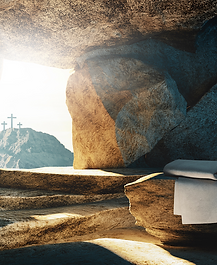
The Empty Tomb
The resurrection of Jesus is the cornerstone of Christian faith. If Jesus rose bodily from the dead, Christianity is true; if not, faith is futile. Central to this claim is the empty tomb, a historically verifiable event that provides strong evidence for the resurrection.
1. The Historical Fact
Jesus was crucified and buried in a rock-hewn tomb.
The tomb was found empty three days later.
Multiple sources attest to this: Matthew 28, Mark 16, Luke 24, John 20, and Paul’s letters (1 Corinthians 15).
Key takeaway: The empty tomb is recorded by multiple early sources, increasing historical credibility.
2. Religious Leaders’ Motive
Jesus was executed to silence Him permanently (John 11:53).
The Pharisees knew He claimed He would rise, so they took extreme measures:
Sealed the tomb
Placed Roman guards
Their goal was total suppression, not just preventing theft. While they feared deception, their actions show they intended to control the situation completely.
Key takeaway: The tomb’s emptiness cannot be explained by oversight or carelessness. The leaders did everything humanly possible to secure it—yet it was still found empty.
3. Roman Guards and Extreme Stakes
Roman soldiers faced death for failing their duty.
The tomb was heavily guarded, making theft or negligence nearly impossible.
Key takeaway: Roman oversight adds a layer of historical accountability to the empty tomb claim.
4. Early Witnesses
Women discovered the empty tomb (Matthew 28:1–10; John 20:1–18).
Women’s testimony was considered less reliable in 1st-century culture.
If fabricated, male witnesses would likely have been used.
Key takeaway: Choosing women as the first witnesses adds authenticity to the account.
5. Why Natural Explanations Fail
Theory - Theft
Problem - Disciples were afraid, tomb sealed, guards present.
Theory - Wrong Tomb
Problem - Leaders knew tomb location; would have corrected immediately.
Theory - Hallucinations
Problem - Cannot explain the empty tomb; only visions of Jesus.
(When it comes to mass hallucinations, science has shown that the phenomenon as popularly imagined—large groups of people independently hallucinating the same event in exactly the same way—is extremely implausible, essentially impossible under normal psychological conditions.)
Conclusion
The empty tomb, combined with:
eyewitness testimony,
the religious leaders’ motives, and
Roman accountability
…forms a compelling historical case for the resurrection. Natural explanations fail to account for all the facts. The resurrection remains the best explanation, forming the foundation for Christian faith.

Jesus Is Named in Many Faiths, Yet He Claims to Be the Only Way.
Jesus is one of the most widely recognized figures in history. His life, teachings, and impact are acknowledged not only in Christianity but also in Islam, Buddhism, and other religious traditions. Yet there is a profound difference: Jesus never pointed to anyone else as the way to God—He always pointed to Himself.
1. Jesus’ Exclusive Claims
Jesus repeatedly claimed to be the unique way to God:
“I am the way, the truth, and the life. No one comes to the Father except through Me” (John 14:6).
“Before Abraham was, I am” (John 8:58) — claiming eternal existence and divinity.
"I and the Father are one.” (John 10:30)
"I am the Alpha and the Omega, the First and the Last, the Beginning and the End.” (Revelation 22:13)
"Whoever has seen me has seen the Father.” (John 14:9)
"I am the resurrection and the life. Whoever believes in me, though he die, yet shall he live.” (John 11:25–26)
Unlike figures in other religions who often present moral teachings or point to a broader path, Jesus consistently identified Himself as the ultimate authority and Savior.
2. Other Religions Mention Jesus
Islam: Recognizes Jesus (Isa) as a prophet, but denies His divinity and atoning death.
Buddhism & Hinduism: Some see Jesus as a wise teacher or enlightened being, but not as God incarnate.
Secular or philosophical perspectives: Often admire His teachings but reject His unique claims.
Observation: All these references acknowledge Jesus’ influence, yet only Christianity presents Him as claiming exclusive authority over salvation.